Wednesday, February 10, 2016

Seibu Lions 2016 Spring Training position outlook: Catcher

How often will Mori play as a catcher?
The Saitama Seibu Lions catcher position is all but set. However, there could be one significant change depending how games play out and decisions Norio Tanabe makes.

The Locks: 

Ginjiro Sumitani: The starting catcher has been a hole offensively, but is one of the best defensive catchers in NPB. Tanabe isn't scared to pinch hit for him in crunch time.

Masatoshi Okada: Okada got an extended look in August when Sumitani wasn't hitting and it worked well for his bat. He has above average defense, but nowhere near the level of what Sumitani brings. An injury after sliding into a base sidelined him for a month, but he could have been the starter for more games had he been healthy.

Tomoya Mori: This is where it gets interesting. Mori's natural position is being a catcher, but the Lions haven't played him there since 2014, his rookie season. He was originally the battery mate of Shintaro Fujinami, the Hanshin Tigers starting pitcher at Osaka Toin High School. If the Lions want to play Takeya "Okawari-kun" Nakamura at the Designated Hitter position, Mori would have to go in the field if they want his bat.

The Lions have had Mori play catcher for a handful of games at the ni-gun level last year and he is listed with the other catchers on the depth chart. With him practicing as a catcher, we can presume they will start him there from now on. In Miyazaki's spring training camp, he is working with the other catchers. They can still insert him in right field if necessary.

===

The Farm: 

These players listed are essentially roster filler to stay in ni-gun. Only injuries will have them come up to the ichi-gun.

Takanori Hoshi: Hoshi is a veteran who was previously at the back of the depth chart of the Yomiuri Giants. Unfortunately, it looks like he will remain in ni-gun as the older catcher. He got some work in Australia with the Melbourne Aces being productive, but it won't be enough.

Tatsuyuki Uemoto: Uemoto has been a backup for most of his career, but saw significant playing time mostly in 2010. He only comes up most likely if there's an injury, like we saw with Okada last season.

Shota Nakata: Nakata has been with the team since 2008, but has only seen limited time in 2012 and 2015. He has 10 career games at the ichi-gun level, including eight appearances last season.

Komei Fujisawa: Fujisawa was a former ikusei draft pick promoted to the 70-man roster.

===

Verdict: 

The Lions' catcher situation shouldn't be a problem for 2016. The only issue and controversy is if Sumitani's hitting is so poor, that it draws a reaction from management to play someone else. It's still possible that the team is grooming Mori for the long term, as he is only 20 years old.

Defense shouldn't be an issue and we would expect Mori to be fine if they ever put him behind the plate this year. While we haven't seen him catch much, the Lions will want to play him for his dangerous bat as a weapon.

===

Other positions: 

Outfield

Bullpen

Rotation

Infield

Manager Norio Tanabe


==

Follow us on Twitter @Graveyardball

Tuesday, February 9, 2016

Oakland A's/Seibu Lions Series: Bert Campaneris


Bert "Campy" Campaneris was an Oakland A's legend, but his short time with the Seibu Lions ended with little fanfare.

==========

Tenures: 1964-1976 with the Kansas City/Oakland A's, 1987-1988 with the Seibu Lions (First and Third Base Coach)

Statistics with the A's: 1795 games, 7895 PAs, .262/.314/.348 70 HRs, 529 RBIs, 566 SBs, 48.9 bWAR

The Cuban-born shortstop has so many interesting tidbits in his long Major League career that it's really hard to find a starting point. I will say that Bert Campaneris deserves plenty of recognition for his role in the Swingin' A's dynasty of the early 70s. His defense, leadoff ability and clutch hits seemed to always show up when it was needed.

In my opinion, he's the greatest shortstop in Oakland A's history and it's not very close. Maybe not the most dominant, but when it comes to longevity and the full body of work, no one compares.

Born in Pueblo Nuevo, Cuba during the reign of the US-backed, Fulgencio Batista's reign as President of Cuba, not much is known about Campaneris until he was signed as an amateur free agent by the Kansas City A's in 1961 for the measly sum of $500. His birth name was Dagoberto (Blanco) Campaneris, which he shortened to Bert. Initially he was signed as a catcher, but was then moved to the infield early in his minor league career.

He advanced quickly through the minor leagues and after impressing for the Birmingham Barons, he was called up to Kansas City in 1964 at the age of 22. In his first game, he put himself into the record books with one of the greatest debuts in Major League history. He became the second player in MLB history to hit two home runs in a debut, joining Bob Nieman who accomplished the same feat 13 years before. Yasmani Grandal, J.P. Arencibia and Mark Quinn have joined Campy with this feat since then.

With that debut, he wouldn't play in the minors for almost 20 years. He'd feature regularly for the hapless Kansas City A's, being one of the few bright spots for an awful second division team. Campaneris took home the AL Stolen Base crown from 1965-1968, 1970, and 1972. He would also lead the circuit in hits in 1968 during the A's first season in Oakland.

Defensively, the errors category wouldn't be very kind to him, but judging on the other data that are available, Campaneris had tremendous range and since he could get to more balls, more errors were the result.

Adding to how bad the A's were in Kansas City, to try and find creative ways to boost attendance, one of those ways was a special promotion where Bert Campaneris played all 9 positions. He'd even pitch ambidextrously when he was on the mound. This was one of the many gimmicks during Charlie Finley's reign as owner of the A's. This gimmick was honored by Will Ferrell during Spring Training last year for a promotion known as "Ferrell Takes the Field."


Will Ferrell met with Bert Campaneris during the 2015 Spring Training in Arizona. 

As the A's started to get comfortable in Oakland, Campaneris was part of a hungry championship core along with Reggie Jackson, Jim "Catfish" Hunter, Vida Blue, Sal Bando and Joe Rudi. In 1970, Campaneris would put in a 20/40 season with a career high total of 22 homers to go along with 42 stolen bases. At the age of 28, this was a career year for Campy and surprisingly, he'd still do a solid job of continuing to play well into his 30s.

The A's would win the West in 1971 and Earl Weaver's Orioles would dispatch them in a sweep of the ALCS that year. This would be the last playoff series the A's would lose for four years.

In 1972, the A's would win the World Series and Campaneris would find himself in a bit of controversy during the ALCS against the Tigers. In game 2, he'd throw a bat at Tigers' pitcher, Lerrin LaGrow. He'd be suspended for the rest of the series, but the A's would win the series in one of the hottest contested playoff series that I can recall.


The A's would repeat in 1973 and along the way, Bert Campaneris would provide a big part in their playoff run. In game two, Campy would hit a "Rickey Henderson" home run (a leadoff home run) that would set the tone for their first win of the series and then in game 3, he would hit the first postseason walk-off home run in A's franchise history. He'd hit it off fellow Cuban-born pitcher,  Mike Cuellar, I chronicled the game here in what I called the 11th greatest win in Oakland A's history.

For the 1973 World Series, Campy would provide one of the two big home runs in the A's clinching Game 7. The other being from Reggie Jackson and his bat toss celebration that was known to seal it. The A's would defeat Yogi Berra's Mets in 7 games, clinching a back to back streak.


That wouldn't be it for this A's team as in 1974, they'd do it again. Campy would provide the last great season of his career, as he'd finish with a bWAR of 5.3. The A's would dominate the Walter Alston led Los Angeles Dodgers in the 1974 World Series and they cemented themselves as a dynasty. This was the last great team of the days before the end of the reserve clause in 1975.

Campy would play two more seasons with the A's and he would be granted free agency after the 1976 season, where he signed with the Texas Rangers. He was an All-Star for the Rangers, but was traded mid-way through his second season with them as the California Angels were the ones who came calling. He'd play three seasons in Anaheim, before playing a season in the Mexican League.

Billy Martin wanted him to return to the Big Leagues and play for the Yankees in 1983, which would be his last season as a professional baseball player.

He wanted to coach in the Major Leagues, but no one gave him a chance. He landed a few minor league jobs and the Seibu Lions offered him a job to coach defense and base running with them in 1987.

Campaneris was one of many coaches on the Seibu Lions in 1987

Coming off of a Japan Series title, the New Breed Lions were in full force and Bert Campaneris added a Japan Series championship to his resumé with the team winning it all the following season.

Campaneris saw legends from the golden age for a year including Kazuhiro Kiyohara, Kimiyasu Kudo, George Vukovich and Koji Akiyama. Kiyohara, Akiyama and Vukovich combined for 86 home runs in that season.

It wasn't all good for Campy in Japan though. The very next year, he left in the middle of the season because of the way he felt he was treated. There is an indication that he was the only foreign coach in NPB during the 1987 season.

In Robert Whiting's book You Gotta Have Wa, Whiting seemed to allude that Campaneris was either trying to do things his way, or he wanted the players to get more rest, since the Lions practiced harder than any other NPB team.

SFGate asked him about the coaching gigs he was offered, and Campy mentioned how the Seibu Lions won the whole thing when he was there, nothing more was said. This mystery will have to be answered by those involved.

I was fortunate enough to meet Campaneris last season at A's Spring Training, it was a real thrill for me with all the great history that he was apart of. Everyone who has met with Campy have said how nice a guy he is. He's now living in Scottsdale, Arizona. When I asked him about his time in Japan he said he "really enjoyed it."

Campaneris actively participates in MLB player alumni association events and charity golf tournaments. 

Baseball Reference's database has found that the best comparisons to Campaneris include Christian Guzman, Dave Concepcion, Luis Aparacio, and Willie Randolph to name a few.

Even with what seemed to have happened with the Lions, it's an honor that Campy has donned the uniforms of both the A's and Lions.

===


Roger Repoz

Jim Tyrone

Esteban German

Hiram Bocachica


Jesus Aguilar

===

Follow us on Twitter @Graveyardball

Sunday, February 7, 2016

Translation: Seibu Lions rookies speak about rookie camp


The Saitama Seibu Lions held a special rookie camp for the month of January. All 10 draft picks were required to move into the team's dormitories, which was near Seibu II, the farm stadium of the Lions. Seibu II is next door to the Seibu Dome. 


Here were some early comments from the rookies on their experience from last month. The order goes from the first round draft pick (Tawata) to the 10th round pick (Matsumoto):

Two weeks have passed since you moved into the Seibu Lions dormitory, how have things been since the move? 

P Shinsaburo Tawata: "I'm getting used to this training and we get along with our elder coaches and players. Now I live a full life!"

P Seiji Kawagoe: "I've gotten quite used to the new surroundings and things are going well. I'd like to join training camp at this condition without injury."

P Shogo Noda: "I'm living a full life everyday and now I'm understanding baseball as the professional level. Soon, I'll move to the [ni-gun training camp] and I think I need to improve my body for the best condition possible."

OF Aito Otaki: "When watching our [veteran] players training, I began to notice their strengths. I've done new training techniques that I never did in high school. I'm still a high school student, so I have to build up my body. I will do my best to be an ichi-gun team member as soon as possible."

P Tadasuke Minamikawa: "[I'm two weeks in] to being a professional baseball player and I've adapted to these new surroundings. I'll continue to condition [my body] and will be ready to face [ni-gun camp]."

P Keisuke Honda: "Since gradually getting used to the training and the life in the dorm, I can feel more relaxed and lead a fulfilled life compared to Day 1."

IF Nien Ting Wu: "I'm more accustomed to these surroundings and training with a sense of fulfillment. Those feelings have given me with the [incentive] to do my best from now on."

P Tsubasa Kokuba: "I'm more and more getting used to this new environment and meeting our veteran players/coaches. Training camp begins soon and my professional baseball life has begun."

P Koki Fujita: "[This is] my first experience living in a dormitory and I'm being and more and more accustomed to it. For the first time, I could not sleep well. But now, I'm [doing fine]."

(Fujita was drafted straight out of high school, along with Otaki)

P Naoaki Matsumoto: "During these two weeks, I did what I could as far as training goes. As far as preparing for training camp, I've been working hard. So when I begin training camp, I will go along with the schedule well. I think that [taking care] of one's body is one of the most important [responsibilities] of the professional baseball players. Therefore I will master it."

A special thank you goes out to our friends known as "Maple Ash" and Mizuho Miyazaki for interpreting help. 

===

Follow us on Twitter @GraveyardBall

Friday, February 5, 2016

Report: Seibu Lions sign Shogo Kimura

Photo Credit: Seibu Lions
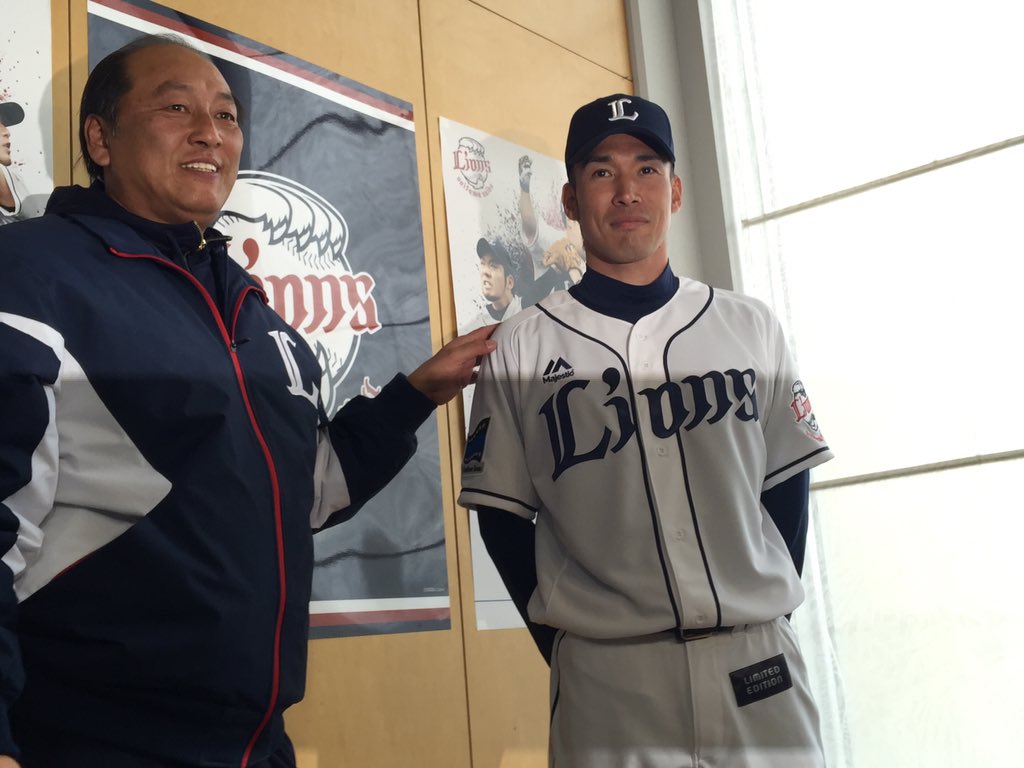
The Saitama Seibu Lions announced they signed IF Shogo Kimura on Friday afternoon. After five days of trying out with the team, the Lions chose to sign him well-before the deadline of his tryout window.

Kimura, who will turn 36 in April, is an infielder mostly at SS and 3B. He will make about ¥200 million yen and wearing No. 0, according to a report by Daily Sports. 

The Lions have been playing him at SS in spring training camp as this chart shows (See the 木 [Ki] in Kimura's name). He could be part of a rotation at SS with Yuji Kaneko, Yuji Onizaki and Kyohei Nagae. It's also possible to play him as a defensive replacement at 3B for Takeya "Okawari-kun" Nakamura. Manager Norio Tanabe is known to put an all-defense lineup in the late innings to secure a win when the closer in on the mound.

Kimura gives the Lions another option with more flexibility on the infield. He also has 41 career games at 1B and 62 at 2B.  He even played 32 games in the outfield, which could give Tanabe another fall back option, similar to how he did with Ryota Wakiya last year.

Previously, he played for the Hiroshima Carp for the last eight years where he was a serviceable reserve. He was originally part of the Yokohama DeNA Baystars from 2003-2007. He has a lifetime .269 batting average over his 13 year career at the ichi-gun level.

With Kimura on the 70-man roster, the Lions officially have 69 players under contract with no one on the ikusei roster. It's possible they could sign someone if necessary, but there is a good chance they are done with additions for the 2016 season. He is the second domestic free agent to sign after a tryout, with the other being OF Naotaka Takehara.

I'd like to see Kaneko and Kimura rotate at SS with Onizaki buried in ni-gun. I don't have issues with Nagae on the first-team as a defensive sub. Kimura can also be a pinch hit option in the event the catcher or RF position is batting late in the game. 

Welcome to the Lions, Kimura.  Good luck for 2016. 

Photo credit: Seibu Lions Twitter

===

Follow us on Twitter @GraveyardBall

Wednesday, February 3, 2016

Report: Anthony Seratelli retires from playing baseball

Photo from Seratelli himself
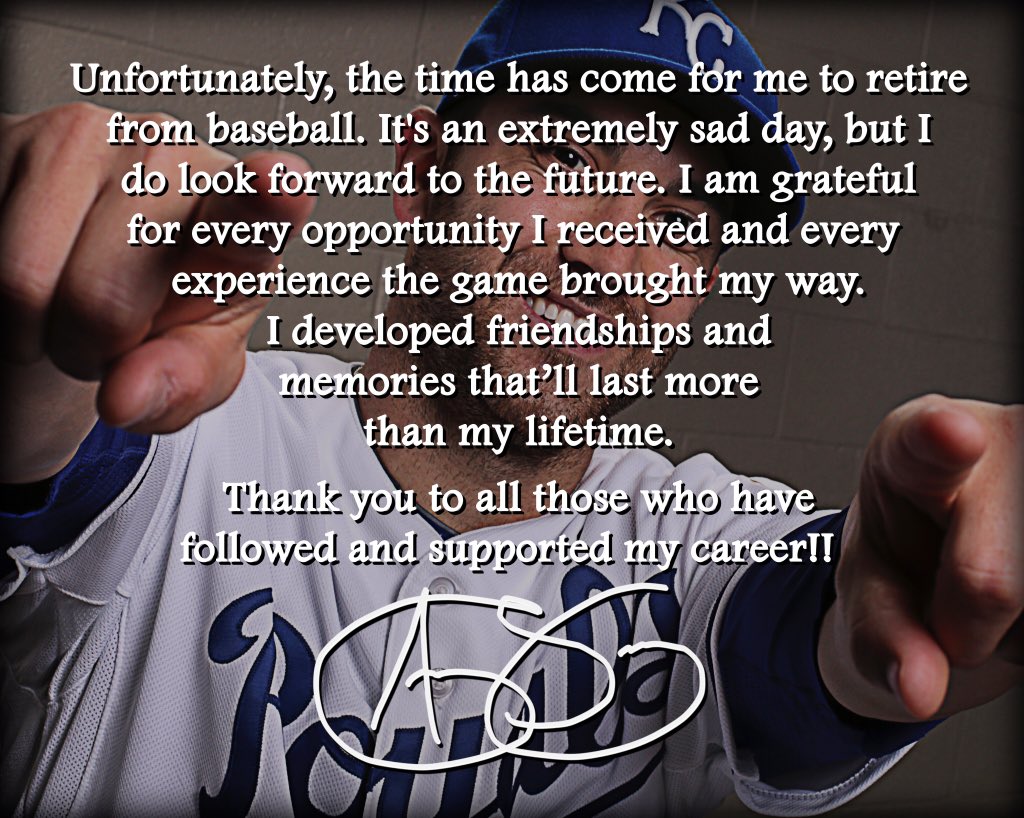
Anthony Seratelli announced on social media that he has decided to retire from playing baseball.  This decision comes weeks before spring training, where pitchers, catchers and position players report to Florida or Arizona.

Seratelli, who will turn 33 later this month, was a career minor leaguer who came from Seton Hall. A New Jersey native, \he was initially too small to play basketball and football, so baseball became his career decision. He was a utility player who was capable of playing any position on the infield or outfield.

After spending 2006 in an independent league, he signed with the Kansas City Royals organization and spent seven years in their minor league system through 2013. In 2014, he spent the year in AAA Las Vegas with the New York Mets organization as a training camp invitee.

He was never able to make it to the big leagues, but had an opportunity with the Saitama Seibu Lions signing him in December of 2014. Unfortunately, he injured himself in training camp trying to do the conditioning drills in Japan. His nickname would be "Terry" among the Lions community with "L's" being merged with "R's" in Japanese. With a Japanese accent, Terry would sound more like "teddy" as the "R" sound does not have heavy emphasis.

Seratelli was sidelined for two months before he made his ichi-gun NPB debut in late May. His most well-known contribution was a two-RBI single against the Yomiuri Giants on May 27. The video of it below can be found here.


Also, here is the fan camera version of Seratelli's big hit.  (Go to 5:14)


Seratelli was given a chance to start in right field, with that area being the flex position on the team, but he would only last two months on the ichi-gun. Sever 0-fers led to his deactivation from the first-team and he remained in ni-gun for the rest of 2015. He would finish his NPB career hitting .183 for the Lions with only one double and one triple as extra base hits.

After the Lions announced they would not bring him back for 2016, he signed a minor league contract with the Arizona Diamondbacks. However, his career would end as he announced retirement on February 3.

Off the field, Seratelli made the most of his time in Japan, taking several photos and videos clips throughout the year. He saw a sumo match, wanted to embrace the Shibuya crossing and even the season of Cherry Blossoms as shown from his Instagram account.

It didn't work out on the field, but he was given an experience of a lifetime to be in Japan and see things that aren't on television or the media. With video and photo production being his side project, he would show his followers some other quirks.

Here's a video he made from his Youtube Channel, where he showed views of Tokyo from a high quality camera.


With Seratelli's playing career now over, we wish nothing but the best for him in the next chapter of his career. Good Seratelli in your future endeavors.

Photo credit: Anthony Seratelli's IG


===
Follow us on Twitter @GraveyardBall

Seibu Lions 2016 Spring Training position outlook: Outfield

Shogo Akiyama came off a historic season in 2015
Spring training began for all 12 teams on February 1. Position and roster spot battles will commence as a result. This will be the first of many position battles we'll be looking at closely for the Saitama Seibu Lions roster. In our first chapter, we'll be looking at the outfield for the Lions.

Overview: 

This was a position that was mostly settled with two primary outfielders and a revolving door at the RF position. The Lions would have the right field done by committee based on the matchup they saw with the opposing pitcher. It was not platooning per say, because several guys had reverse splits or saw time even if someone batted right handed and the pitcher was a righty, which was the same for a lefty. Last year, the Lions had 11 different players start at least one game in right field. 


Starters: 

Shogo Akiyama: Akiyama came off a single-season hits record 2015 season, where he now is standing alone with 216 hits. This included a 31 game hit streak. While it will be unreal to ask him to repeat a season of his caliber, he should be a great leadoff hitter heading into 2016 and be the everyday starting CF. His range and arm are both adequate in the field, but his plate discipline was even smarter, where he constantly stated his goal was to get on base, not be selfish for a hit. 

Takumi Kuriyama: After having a slow start to the 2015 season, Kuriyama rebounded and got his average up to .268, but there were times he was benched and his order in the lineup fell as low to batting seventh. The team's captain had a reduced role by the season's end and he hopes to have a stronger 2016. Defense will be fine in LF, but he is usually subbed in the ninth inning for someone with better range if necessary. 

===

Lock to make the ichi-gun: 

Shogo Saito: Saito is primarily in for his defense as a replacement player. However, it plays an important role as Norio Tanabe likes using him in the late innings in place of Kuriyama in left field, or possible taking over whoever was in right field. He appeared in 103 games last year and started a handful of them. Saito should remain the fourth outfielder on the team for 2016. 

The Committee:  

The Lions will have several players called up and down throughout the season and this year shouldn't be different. They will base their decisions on sabermetrics, as well as film study when seeing the opposing pitcher's tendencies, figuring out the best matchup possible. It's very clear that these choices are not just paper stats and looking at a computer. Several players have hit a home run out of nowhere due to research and studying the opposition as a right fielder.

Tomoya Mori: What? A catcher being listed in the outfield? Mori was a right fielder for 23 games last season, which included the interleague games on the road where there was no designated hitter. If the Lions choose to have Takeya "Okawari-kun" Nakamura as the DH, Mori would need to go in the field. Right field is where they had him due to it being the flex position. 


Mori has the arm to be an outfielder, but the range is lacking. There could be more growing pains if they want his bat, but fielding can be a liability. 

Fumikazu Kimura: A former first round pick who is a converted pitcher, Kimura had one strong week of hitting home runs, but was a flash in the pan. He even had a Grand slam against the Softbank Hawks last year in a clutch moment. After playing 100 games in 2014, he only appeared in 49 last season due to poor hitting. He could provide some pop depending on the pitcher. 

Naotaka Takehara: Takehara was a tryout signee last fall. He was released by the Orix Buffaloes and initially began his NPB career with the Chiba Lotte Marines. Previously known for having poor range, fielding and plate discipline, he was productive with the bat in a limited playing time with Orix. The Lions will not want him to start every game, but he could be useful for a certain matchup. He hit .271 in 62 games combined from 2014-2015. At most, he will play about 50 games in right field. 

Yutaro Osaki: Osaki appeared in 47 games last year and started only a handful of them. He could be a pinch hitter most of the time, but wasn't bad in that role when Tanabe wanted to insert him into the 8th or 9th spot in the order. He should appear in 50 games at most.  

Ryo Sakata: Sakata battled an injury which sidelined him for the entire 2014 season after showing promise in 2013. His lack of hitting kept him in ni-gun for 2015 and he only appeared in 15 games total with the ichi-gun. He will have to earn his way back to the top team if he wants playing time. 

The Bench:

Masato Kumashiro: Kumashiro was a late game substitute for defense in right field. He appeared in 38 games total last year and was also available as a pinch runner/hitter. His best play was the diving stop to preserve a 1-0 win in Omiya. Unlike Hisashi Iwakuma's name being a "Bear" with his "Kuma" kanji (岩隈being part of it, Kumashiro's name legitimately has the correct Kuma kanji (熊) for bear. A few select fans will have bear hats or suits in his honor. Iwakuma actually means shadow of a rock/stone.

Shotaro Tashiro: Tashiro was the extra pinch runner and defensive replacement when the Lions would deactivate a starting pitcher temporarily for a few games due to a lengthy break ahead. His most remembered play in 2015 was when he stopped a ground ball going to a shortstop, taking himself out and preventing a double play to end the inning. The Lions would eventually win the game with a game winning base hit. If he shows good range, he could earn his way to being a frequent replacement player.

The Farm: 

These are players who should be in ni-gun most likely for most of the year. Not much data will be known on them besides ni-gun stats.

Aito Otaki: Otaki was the Fourth round draft pick of the Lions last fall. He is a rookie coming from Hanasaki Tokuharu High school, the high school which represented Saitama prefecture in the 2015 Koshien Tournament.

Hitoto Komazuki: Komazuki was a third round pick of the Lions in 2011. He has no experience with the ichi-gun entering his fifth season in the organization.
 
Daisuke Togawa: Togawa was an ikusei draft pick from 2014. The Lions promoted him to the 70-man roster in November. 

The Tryout: 

Shogo Kimura: Shogo Kimura is mostly known as a reserve infielder, but has 32 games in his career in the outfield. If the Lions sign him to the 70-man roster, Tanabe will have the option to insert him in right field if he wants his bat for a given game. 

Overall: 

This position should not be a battle in camp, but rather establishing a reliable bat. The right field position most likely won't have an everyday outfielder, but it's possible that they could approach the number of players who started in right field last year. They have 11 outfielders under contract not counting Mori and Shogo Kimura is an outside option in the event he signs with the team. 

We can only hope the defense will be respectable with reduced errors. Range should be fine unless Mori is starting in right field. 

===

Other positions: 

Catcher

Starting Rotation

Bullpen

Infield

Manager Norio Tanabe

=== 

Follow us on Twitter @GraveyardBall

Tuesday, February 2, 2016

Oakland A's/Seibu Lions Series: Esteban German


The bat flipping', OBP rich, Dominican belonged in Japan, where he finally made the jump.

=======

Tenures: 2002-2004 with the Oakland A's, 2012-2013 with the Seibu Lions

Statistics with the A's: 45 games, 109 PAs, .232/.296/.263 0 HRs, 8 RBIs, -0.8 bWAR

Statistics with the Lions:

2012: 144 games, 583 PAs, .270/.346/.343 3 HRs, 60 RBIs, 41 SBs

2013: 144 games, 623 PAs, .319/.418/.396 4 HRs, 55 RBIs, 40 SBs

Through this series, I've learned about all the A's prospects who never got their chance because they were simply going through the system at the wrong time. We already saw that with Jose Ortiz, now we see it again with Esteban German. Both those players would become high impact players in Japan.

German was signed by the A's in 1996 as an 18 year old. During the 90s, the A's were extremely active in the Latin American amateur market, most notably with Miguel Tejada and Ramon Hernandez. The A's found a bit of success with that area. Up until today, they were one of the teams that exploited the possibilities in that market.

Right away, the A's saw the high OBP numbers that German put up through the first few levels of their minor league system. This along with incredible stolen base ability, including one stint in high-A Visalia where he stole 78 bases in 109 games. With that scouting report, German had "perfect leadoff man" written all over him.

During the early 2000s, prospect rankings weren't as uniform as they are nowadays, in other words, the rankings for each big baseball publication would have completely different lists full of different guys, as compared to today where every big prospect will show up in all the big publications. Esteban German showed up in the 2001 Baseball Prospectus' Top Prospects as the 18th best prospect.

After a big 2001 season splitting time in Midland and Sacramento, German was pegged to challenge for a spot on the A's in 2002. He'd end up spending the majority of 2002 in Sacramento (AAA / ni-gun), and he wasn't as dominant as he had been before. As a result, he only played in 9 games for the A's in 2002.

It would be Mark Ellis who would grab the brass ring as the starting second baseman for the A's and that would be the thing that blocked German from advancing beyond anything other than a bench role with Oakland. German had great baserunning skills and plate discipline, but Ellis was more consistent and much better defensively, so it was clear who Billy Beane was going to go with.

German would see the same issues in 2003, and even in 2004 as well, with Ellis out for that year, German looked to finally get a chance, but then a guy named Marco Scutaro stepped in and ended any chances of that happening. The A's at that time were a team who did not value base stealing, so it was clear that German's days in Oakland were numbered. After the 2004 season, German was cut and granted free agency. He'd sign with the Texas Rangers, and he'd feature even less for them during the 2005 season.

Then during the Winter Meetings after the 2005 season, the Kansas City Royals of all teams made a minor trade for German and they looked to finally give him a real chance in the major leagues. German rewarded the Royals for their faith with a solid .322/.422/.459 in 106 games for a hapless Royals team. He was given more playing time in 2007 and German still put up a decent .264/.351/.376 in 121 games.

After the season, German earned his first year of making $1,000,000 in arbitration. In 2008, things went downhill for German and he was released by the Royals right before the 2009 season. He would then be signed by the Chicago Cubs, who'd release him before Opening Day of that same season. German sign with the Texas Rangers once again, a team he'd play with for another three seasons in limited action.

During his time in Texas, he was most known for creating the gimmick known as "the claw" which is up there with the rally monkey among the worst gimmicks in baseball. He'd end up on the Rangers 2011 World Series roster, appearing as a pinch hitter in game one. German departed from MLB after the 2011 season and it was the Seibu Lions who signed him.

At the age of 34, the Lions gave German everyday duties for his entire tenure, he never missed a game during his time in Saitama. While with the Lions, German showed his base stealing skills that hadn't been seen in several years. He'd bag 81 stolen bases in his two years with the team. The year 2013 was especially special for German, who won the Pacific League OBP title with an amazing .418 OBP. His 40 stolen bases were good enough for second in the Pacific League.


Here's German's Oendan song.


It's not clear why German was not brought back for the 2014 season, but he ended up signing with the Orix Buffaloes and spent the last two years with the team. In his two years with Orix, he was still able to steal 47 bases, but battled injuries in the 2015 season. In a limited playing time for 2015, he .267/.339/.326 in 73 games.

Most recently, he played in the Dominican Winter League for the Leones del Escogido in the month of January. He appeared in only six games as a part time infielder. German where he won a championship with the team. His team got to participate in the 2016 Caribbean Series, representing the Dominican Republic. German's final baseball game was one appearance in the Dominican Winter League for the 2016-2017 season.