Friday, February 5, 2016

Report: Seibu Lions sign Shogo Kimura

Photo Credit: Seibu Lions
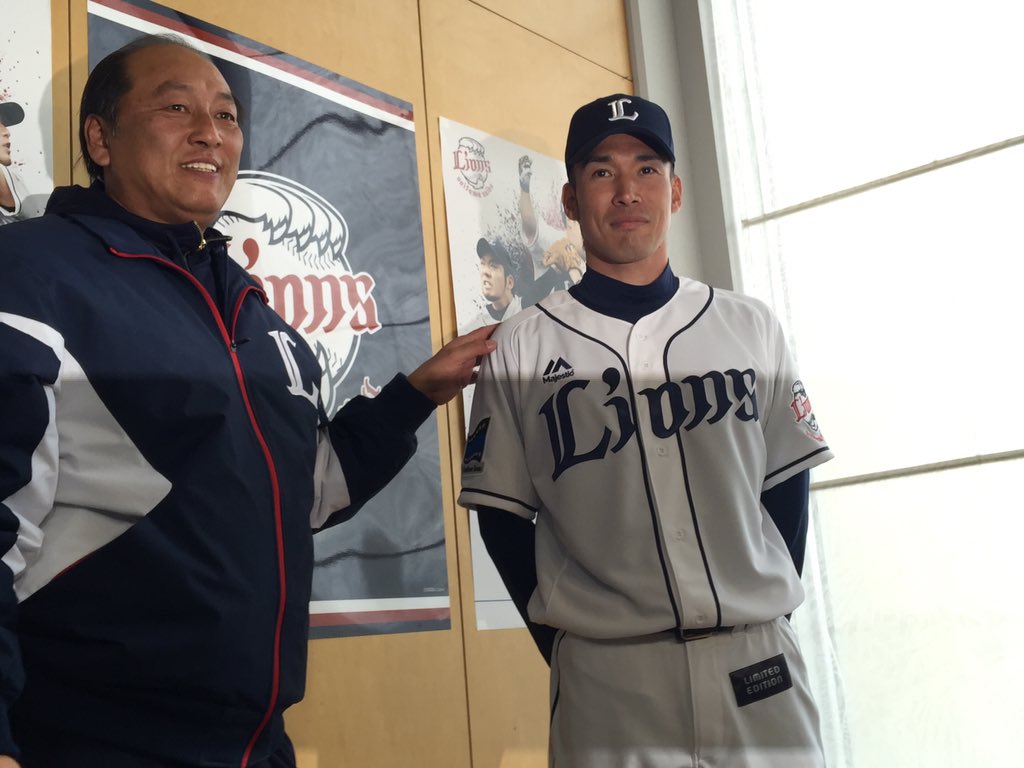
The Saitama Seibu Lions announced they signed IF Shogo Kimura on Friday afternoon. After five days of trying out with the team, the Lions chose to sign him well-before the deadline of his tryout window.

Kimura, who will turn 36 in April, is an infielder mostly at SS and 3B. He will make about ¥200 million yen and wearing No. 0, according to a report by Daily Sports. 

The Lions have been playing him at SS in spring training camp as this chart shows (See the 木 [Ki] in Kimura's name). He could be part of a rotation at SS with Yuji Kaneko, Yuji Onizaki and Kyohei Nagae. It's also possible to play him as a defensive replacement at 3B for Takeya "Okawari-kun" Nakamura. Manager Norio Tanabe is known to put an all-defense lineup in the late innings to secure a win when the closer in on the mound.

Kimura gives the Lions another option with more flexibility on the infield. He also has 41 career games at 1B and 62 at 2B.  He even played 32 games in the outfield, which could give Tanabe another fall back option, similar to how he did with Ryota Wakiya last year.

Previously, he played for the Hiroshima Carp for the last eight years where he was a serviceable reserve. He was originally part of the Yokohama DeNA Baystars from 2003-2007. He has a lifetime .269 batting average over his 13 year career at the ichi-gun level.

With Kimura on the 70-man roster, the Lions officially have 69 players under contract with no one on the ikusei roster. It's possible they could sign someone if necessary, but there is a good chance they are done with additions for the 2016 season. He is the second domestic free agent to sign after a tryout, with the other being OF Naotaka Takehara.

I'd like to see Kaneko and Kimura rotate at SS with Onizaki buried in ni-gun. I don't have issues with Nagae on the first-team as a defensive sub. Kimura can also be a pinch hit option in the event the catcher or RF position is batting late in the game. 

Welcome to the Lions, Kimura.  Good luck for 2016. 

Photo credit: Seibu Lions Twitter

===

Follow us on Twitter @GraveyardBall

Wednesday, February 3, 2016

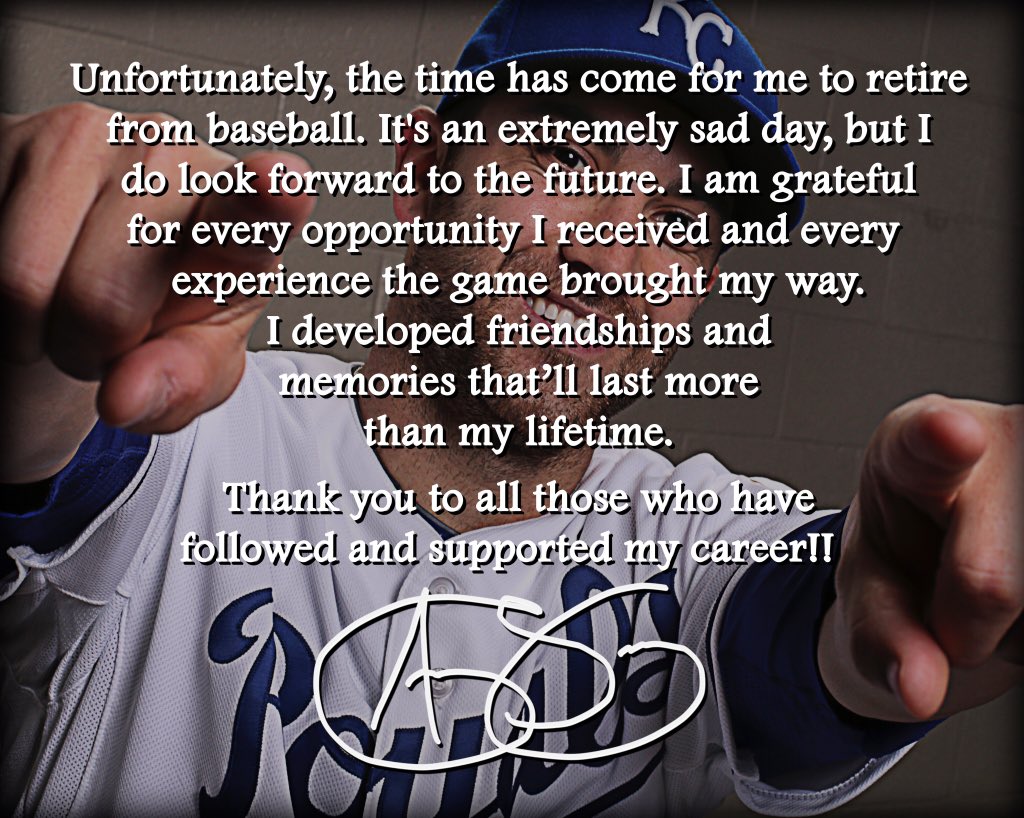
Report: Anthony Seratelli retires from playing baseball

Photo from Seratelli himself
Anthony Seratelli announced on social media that he has decided to retire from playing baseball.  This decision comes weeks before spring training, where pitchers, catchers and position players report to Florida or Arizona.

Seratelli, who will turn 33 later this month, was a career minor leaguer who came from Seton Hall. A New Jersey native, \he was initially too small to play basketball and football, so baseball became his career decision. He was a utility player who was capable of playing any position on the infield or outfield.

After spending 2006 in an independent league, he signed with the Kansas City Royals organization and spent seven years in their minor league system through 2013. In 2014, he spent the year in AAA Las Vegas with the New York Mets organization as a training camp invitee.

He was never able to make it to the big leagues, but had an opportunity with the Saitama Seibu Lions signing him in December of 2014. Unfortunately, he injured himself in training camp trying to do the conditioning drills in Japan. His nickname would be "Terry" among the Lions community with "L's" being merged with "R's" in Japanese. With a Japanese accent, Terry would sound more like "teddy" as the "R" sound does not have heavy emphasis.

Seratelli was sidelined for two months before he made his ichi-gun NPB debut in late May. His most well-known contribution was a two-RBI single against the Yomiuri Giants on May 27. The video of it below can be found here.


Also, here is the fan camera version of Seratelli's big hit.  (Go to 5:14)


Seratelli was given a chance to start in right field, with that area being the flex position on the team, but he would only last two months on the ichi-gun. Sever 0-fers led to his deactivation from the first-team and he remained in ni-gun for the rest of 2015. He would finish his NPB career hitting .183 for the Lions with only one double and one triple as extra base hits.

After the Lions announced they would not bring him back for 2016, he signed a minor league contract with the Arizona Diamondbacks. However, his career would end as he announced retirement on February 3.

Off the field, Seratelli made the most of his time in Japan, taking several photos and videos clips throughout the year. He saw a sumo match, wanted to embrace the Shibuya crossing and even the season of Cherry Blossoms as shown from his Instagram account.

It didn't work out on the field, but he was given an experience of a lifetime to be in Japan and see things that aren't on television or the media. With video and photo production being his side project, he would show his followers some other quirks.

Here's a video he made from his Youtube Channel, where he showed views of Tokyo from a high quality camera.


With Seratelli's playing career now over, we wish nothing but the best for him in the next chapter of his career. Good Seratelli in your future endeavors.

Photo credit: Anthony Seratelli's IG


===
Follow us on Twitter @GraveyardBall

Seibu Lions 2016 Spring Training position outlook: Outfield

Shogo Akiyama came off a historic season in 2015
Spring training began for all 12 teams on February 1. Position and roster spot battles will commence as a result. This will be the first of many position battles we'll be looking at closely for the Saitama Seibu Lions roster. In our first chapter, we'll be looking at the outfield for the Lions.

Overview: 

This was a position that was mostly settled with two primary outfielders and a revolving door at the RF position. The Lions would have the right field done by committee based on the matchup they saw with the opposing pitcher. It was not platooning per say, because several guys had reverse splits or saw time even if someone batted right handed and the pitcher was a righty, which was the same for a lefty. Last year, the Lions had 11 different players start at least one game in right field. 


Starters: 

Shogo Akiyama: Akiyama came off a single-season hits record 2015 season, where he now is standing alone with 216 hits. This included a 31 game hit streak. While it will be unreal to ask him to repeat a season of his caliber, he should be a great leadoff hitter heading into 2016 and be the everyday starting CF. His range and arm are both adequate in the field, but his plate discipline was even smarter, where he constantly stated his goal was to get on base, not be selfish for a hit. 

Takumi Kuriyama: After having a slow start to the 2015 season, Kuriyama rebounded and got his average up to .268, but there were times he was benched and his order in the lineup fell as low to batting seventh. The team's captain had a reduced role by the season's end and he hopes to have a stronger 2016. Defense will be fine in LF, but he is usually subbed in the ninth inning for someone with better range if necessary. 

===

Lock to make the ichi-gun: 

Shogo Saito: Saito is primarily in for his defense as a replacement player. However, it plays an important role as Norio Tanabe likes using him in the late innings in place of Kuriyama in left field, or possible taking over whoever was in right field. He appeared in 103 games last year and started a handful of them. Saito should remain the fourth outfielder on the team for 2016. 

The Committee:  

The Lions will have several players called up and down throughout the season and this year shouldn't be different. They will base their decisions on sabermetrics, as well as film study when seeing the opposing pitcher's tendencies, figuring out the best matchup possible. It's very clear that these choices are not just paper stats and looking at a computer. Several players have hit a home run out of nowhere due to research and studying the opposition as a right fielder.

Tomoya Mori: What? A catcher being listed in the outfield? Mori was a right fielder for 23 games last season, which included the interleague games on the road where there was no designated hitter. If the Lions choose to have Takeya "Okawari-kun" Nakamura as the DH, Mori would need to go in the field. Right field is where they had him due to it being the flex position. 


Mori has the arm to be an outfielder, but the range is lacking. There could be more growing pains if they want his bat, but fielding can be a liability. 

Fumikazu Kimura: A former first round pick who is a converted pitcher, Kimura had one strong week of hitting home runs, but was a flash in the pan. He even had a Grand slam against the Softbank Hawks last year in a clutch moment. After playing 100 games in 2014, he only appeared in 49 last season due to poor hitting. He could provide some pop depending on the pitcher. 

Naotaka Takehara: Takehara was a tryout signee last fall. He was released by the Orix Buffaloes and initially began his NPB career with the Chiba Lotte Marines. Previously known for having poor range, fielding and plate discipline, he was productive with the bat in a limited playing time with Orix. The Lions will not want him to start every game, but he could be useful for a certain matchup. He hit .271 in 62 games combined from 2014-2015. At most, he will play about 50 games in right field. 

Yutaro Osaki: Osaki appeared in 47 games last year and started only a handful of them. He could be a pinch hitter most of the time, but wasn't bad in that role when Tanabe wanted to insert him into the 8th or 9th spot in the order. He should appear in 50 games at most.  

Ryo Sakata: Sakata battled an injury which sidelined him for the entire 2014 season after showing promise in 2013. His lack of hitting kept him in ni-gun for 2015 and he only appeared in 15 games total with the ichi-gun. He will have to earn his way back to the top team if he wants playing time. 

The Bench:

Masato Kumashiro: Kumashiro was a late game substitute for defense in right field. He appeared in 38 games total last year and was also available as a pinch runner/hitter. His best play was the diving stop to preserve a 1-0 win in Omiya. Unlike Hisashi Iwakuma's name being a "Bear" with his "Kuma" kanji (岩隈being part of it, Kumashiro's name legitimately has the correct Kuma kanji (熊) for bear. A few select fans will have bear hats or suits in his honor. Iwakuma actually means shadow of a rock/stone.

Shotaro Tashiro: Tashiro was the extra pinch runner and defensive replacement when the Lions would deactivate a starting pitcher temporarily for a few games due to a lengthy break ahead. His most remembered play in 2015 was when he stopped a ground ball going to a shortstop, taking himself out and preventing a double play to end the inning. The Lions would eventually win the game with a game winning base hit. If he shows good range, he could earn his way to being a frequent replacement player.

The Farm: 

These are players who should be in ni-gun most likely for most of the year. Not much data will be known on them besides ni-gun stats.

Aito Otaki: Otaki was the Fourth round draft pick of the Lions last fall. He is a rookie coming from Hanasaki Tokuharu High school, the high school which represented Saitama prefecture in the 2015 Koshien Tournament.

Hitoto Komazuki: Komazuki was a third round pick of the Lions in 2011. He has no experience with the ichi-gun entering his fifth season in the organization.
 
Daisuke Togawa: Togawa was an ikusei draft pick from 2014. The Lions promoted him to the 70-man roster in November. 

The Tryout: 

Shogo Kimura: Shogo Kimura is mostly known as a reserve infielder, but has 32 games in his career in the outfield. If the Lions sign him to the 70-man roster, Tanabe will have the option to insert him in right field if he wants his bat for a given game. 

Overall: 

This position should not be a battle in camp, but rather establishing a reliable bat. The right field position most likely won't have an everyday outfielder, but it's possible that they could approach the number of players who started in right field last year. They have 11 outfielders under contract not counting Mori and Shogo Kimura is an outside option in the event he signs with the team. 

We can only hope the defense will be respectable with reduced errors. Range should be fine unless Mori is starting in right field. 

===

Other positions: 

Catcher

Starting Rotation

Bullpen

Infield

Manager Norio Tanabe

=== 

Follow us on Twitter @GraveyardBall

Tuesday, February 2, 2016

Oakland A's/Seibu Lions Series: Esteban German


The bat flipping', OBP rich, Dominican belonged in Japan, where he finally made the jump.

=======

Tenures: 2002-2004 with the Oakland A's, 2012-2013 with the Seibu Lions

Statistics with the A's: 45 games, 109 PAs, .232/.296/.263 0 HRs, 8 RBIs, -0.8 bWAR

Statistics with the Lions:

2012: 144 games, 583 PAs, .270/.346/.343 3 HRs, 60 RBIs, 41 SBs

2013: 144 games, 623 PAs, .319/.418/.396 4 HRs, 55 RBIs, 40 SBs

Through this series, I've learned about all the A's prospects who never got their chance because they were simply going through the system at the wrong time. We already saw that with Jose Ortiz, now we see it again with Esteban German. Both those players would become high impact players in Japan.

German was signed by the A's in 1996 as an 18 year old. During the 90s, the A's were extremely active in the Latin American amateur market, most notably with Miguel Tejada and Ramon Hernandez. The A's found a bit of success with that area. Up until today, they were one of the teams that exploited the possibilities in that market.

Right away, the A's saw the high OBP numbers that German put up through the first few levels of their minor league system. This along with incredible stolen base ability, including one stint in high-A Visalia where he stole 78 bases in 109 games. With that scouting report, German had "perfect leadoff man" written all over him.

During the early 2000s, prospect rankings weren't as uniform as they are nowadays, in other words, the rankings for each big baseball publication would have completely different lists full of different guys, as compared to today where every big prospect will show up in all the big publications. Esteban German showed up in the 2001 Baseball Prospectus' Top Prospects as the 18th best prospect.

After a big 2001 season splitting time in Midland and Sacramento, German was pegged to challenge for a spot on the A's in 2002. He'd end up spending the majority of 2002 in Sacramento (AAA / ni-gun), and he wasn't as dominant as he had been before. As a result, he only played in 9 games for the A's in 2002.

It would be Mark Ellis who would grab the brass ring as the starting second baseman for the A's and that would be the thing that blocked German from advancing beyond anything other than a bench role with Oakland. German had great baserunning skills and plate discipline, but Ellis was more consistent and much better defensively, so it was clear who Billy Beane was going to go with.

German would see the same issues in 2003, and even in 2004 as well, with Ellis out for that year, German looked to finally get a chance, but then a guy named Marco Scutaro stepped in and ended any chances of that happening. The A's at that time were a team who did not value base stealing, so it was clear that German's days in Oakland were numbered. After the 2004 season, German was cut and granted free agency. He'd sign with the Texas Rangers, and he'd feature even less for them during the 2005 season.

Then during the Winter Meetings after the 2005 season, the Kansas City Royals of all teams made a minor trade for German and they looked to finally give him a real chance in the major leagues. German rewarded the Royals for their faith with a solid .322/.422/.459 in 106 games for a hapless Royals team. He was given more playing time in 2007 and German still put up a decent .264/.351/.376 in 121 games.

After the season, German earned his first year of making $1,000,000 in arbitration. In 2008, things went downhill for German and he was released by the Royals right before the 2009 season. He would then be signed by the Chicago Cubs, who'd release him before Opening Day of that same season. German sign with the Texas Rangers once again, a team he'd play with for another three seasons in limited action.

During his time in Texas, he was most known for creating the gimmick known as "the claw" which is up there with the rally monkey among the worst gimmicks in baseball. He'd end up on the Rangers 2011 World Series roster, appearing as a pinch hitter in game one. German departed from MLB after the 2011 season and it was the Seibu Lions who signed him.

At the age of 34, the Lions gave German everyday duties for his entire tenure, he never missed a game during his time in Saitama. While with the Lions, German showed his base stealing skills that hadn't been seen in several years. He'd bag 81 stolen bases in his two years with the team. The year 2013 was especially special for German, who won the Pacific League OBP title with an amazing .418 OBP. His 40 stolen bases were good enough for second in the Pacific League.


Here's German's Oendan song.


It's not clear why German was not brought back for the 2014 season, but he ended up signing with the Orix Buffaloes and spent the last two years with the team. In his two years with Orix, he was still able to steal 47 bases, but battled injuries in the 2015 season. In a limited playing time for 2015, he .267/.339/.326 in 73 games.

Most recently, he played in the Dominican Winter League for the Leones del Escogido in the month of January. He appeared in only six games as a part time infielder. German where he won a championship with the team. His team got to participate in the 2016 Caribbean Series, representing the Dominican Republic. German's final baseball game was one appearance in the Dominican Winter League for the 2016-2017 season. 

Sunday, January 31, 2016

2016 Seibu Lions schedule of times and locations released


The Saitama Seibu Lions schedule for the 2016 season was released on Wednesday, January 26.  While Opening Day was already announced to be against the Orix Buffaloes on March 25, the time was announced to start at 18:00 in Japan time.

NPB will have some games away from a team's traditional home stadium in favor of a more rural area so that fans of the team can go see them and not make a significantly long trip. The Hokkaido Nippon-Ham Fighters have several stadiums they use around the island and prefecture of Hokkaido. They also have multiple home games in Tokyo Dome, which was a building they used to play in prior to moving to Sapporo.  

Here's a guide and links to know how the schedule will work:

UPDATE: The NPB website has updated itself in English.

March schedule

April schedule (English)

May schedule (English)

June schedule (English)

July schedule (English)

August schedule (English)

September schedule (English) 

October schedule

-The Home team is listed on the left for a game.

Traditional Home Stadium Translations: 

Central League: 

 東京ドーム - Tokyo Dome (Tokyo) - Yomiuri Giants
マツダスタジアム - Mazda Zoom-Zoom Stadium (Hiroshima) - Hiroshima Toyo Carp
神 宮 - Meiji Jingu Stadim (Tokyo) - Tokyo Yakult Swallows
横 浜  - Yokohama Stadium (Yokohama) - Yokohama DeNA Baystars
ナゴヤドーム - Nagoya Dome (Nagoya) - Chunichi Dragons
甲子園  - Koshien Stadium (Nishinomiya) - Hanshin Tigers


Pacific League: 

京セラD大阪 - Kyocera Dome (Osaka) - Orix Buffaloes
Koboスタ宮城 - Kobo Stadium (Sendai) - Tohoku Rakuten Golden Eagles
西武プリンス - Seibu Dome (Tokorozawa) - Saitama Seibu Lions
QVCマリン - QVC Marine Field (Chiba) - Chiba Lotte Marines
札幌ドーム- Sapporo Dome (Sapporo) - Hokkaido Nippon-Ham Fighters
ヤフオクドーム - Fukuoka Yafuoku! Dome (Fukuoka) - Fukuoka Softbank Hawks

Time Conversion:

Japan does not rotate the clock to daylight savings time, so when it is standard time, they are 17 hours in front of Pacific Time (14 hours in front of Eastern time). When the season begins, North America will be on Daylight savings time, making Japan 16 hours ahead of Pacific and 13 hours ahead of Eastern time.

The best way to convert this quickly without trying to add 16, is to use Eastern time, add 1 and change "AM" to "PM" or vice versa if it's PM, meaning it's AM in Japan after adding 1. (For China, it's even easier because they are exactly 12 hours in front of Eastern time, meaning all you have to do is change AM to PM or vice versa).

A night game that traditionally starts at 18:00 (6:00PM) in Japan time, means that it will be 2:00 a.m. in Pacific time and 5:00 a.m. in Eastern time.  Day games are usually at 13:00 (1:00 p.m.) or 14:00 (2:00 p.m.) in Japan time, making it easier for the West coast to watch at 9:00 p.m. and 10:00 p.m., respectively. It becomes Midnight and 1:00 a.m. in eastern time if a day game in Japan is at 13:00 or 14:00, local time.

===

Special Lions notes: 

Omiya is the alternate home of the Seibu Lions
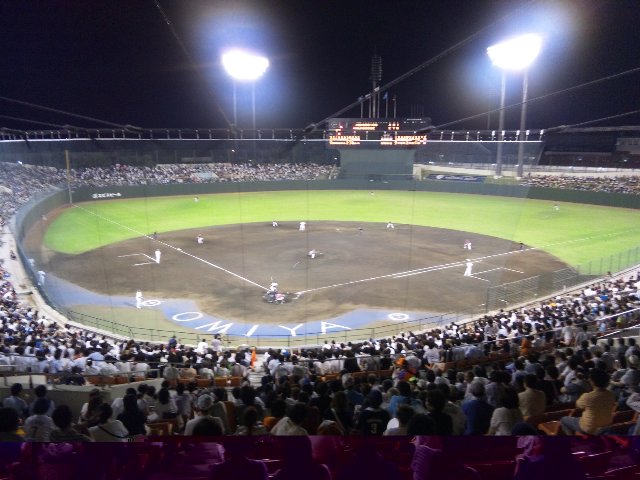
 There are some irregularities in the Seibu Lions schedule where they will play some home games away from Seibu Dome. They will have three games in Omiya, which is deeper into Saitama prefecture.


The three games in Omiya will be on 4/13 against the Hawks, 5/26 against the Eagles and 8/26 against the Fighters. It's the only alternate stadium that the Lions regularly use each year.

-The Lions will face the Chiba Lotte Marines in a "home game" on 6/24 within Gunma Prefecture, which is north of Saitama Prefecture. It will be in Gunma's capital of Maebashi. Kona Takahashi played high school baseball in Maebashi and it wouldn't be surprising if he gets to play in front of his "home crowd" for the game.

-Interleague games will go until from May 31 until June 19. Each team will play a three-game series against each of the other teams in the opposite league. The Lions will host the Dragons, Giants and Baystars while they will play on the road against the Carp, Tigers and Swallows. June 20-23 will be a period of interleague makeup games in the event rain occurs during the month.

There is even a "champion" for who does best in interleague and teams who finish in the top four will receive a financial bonus. Whichever league wins the head to head interleague series will receive a draft bonus for the second round and beyond. (Example, the Eagles finished in last place for the Pacific League and by default, they had the first pick of the second round in the 2015 NPB Draft). Full explanation can be found here.

-The Lions will also play six games in Kobe, which is the secondary home of the Orix Buffaloes. With Orix being a merged team, they have two stadiums, but play majority of their home games in Kyocera Dome. Kobe's baseball stadium was home to the Orix BlueWave, which is where Ichiro Suzuki began his career before the Seattle Mariners.

-On August 18, the Lions will play a road game against the Hawks in Kyocera Dome. This could be a corporate party by Softbank, giving their employees a free ticket (exception being the Lions Oendan) and uniform for the game. The Hawks were originally Nankai Hawks and played in Osaka. Last year, the Lions played the Hawks in Tokyo Dome, which was a home game for the Hawks.

===
Follow us on Twitter: @GraveyardBall

Saturday, January 30, 2016

Your guide to adopting an NPB team part 12: Saitama Seibu Lions (埼玉西武ライオンズ)

Note: This post was featured on the Blogathon at Baseball Continuum

Saitama Seibu Lions (埼玉西武ライオンズ)


Update: Found this post? Here's a 2020 edition.

The Saitama (埼玉) Seibu (西武) Lions (ライオンズ) were originally in Fukuoka (Kyushu island) as the Nishitetsu Clippers in 1950 for one season. Nishitetsu is an electric railway in Fukuoka which still operates today. After a merger with another team, they became Nishitetsu Lions one year later in 1951. 

There would be a Black Mist scandal involving players fixing games from 1969-1971, similar to the Black Sox scandal from 1919. Nishitetsu would sell the team and they would be Taiheiyo Club Lions from 1973-1976, which is named after a golf course and resort developer. They would then be sold to Crown Lighter Gas, to be called the Crown Lighter Lions from 1977-1978. 

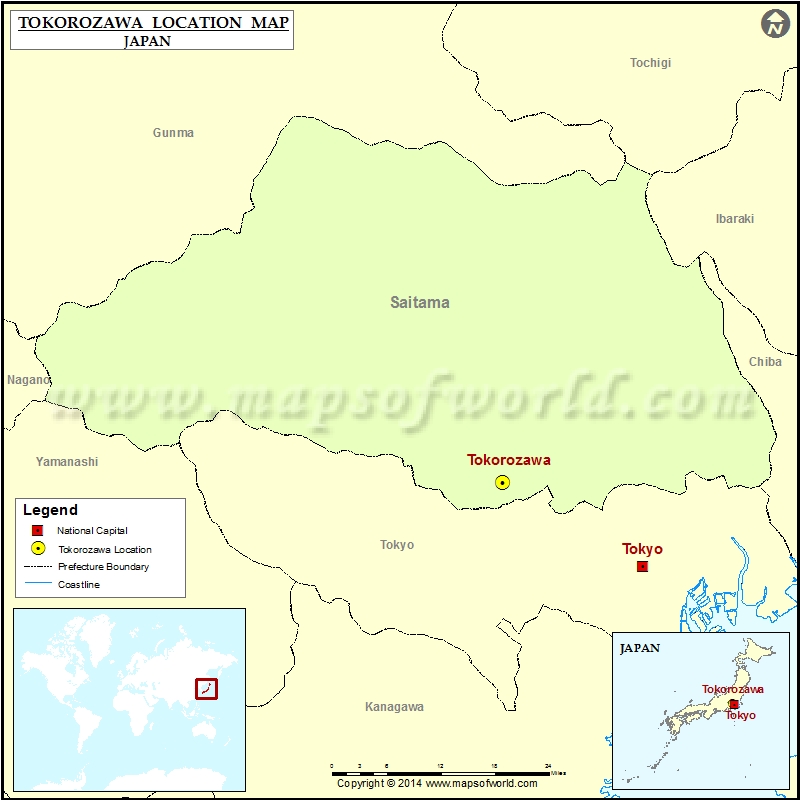
Eventually, they were sold to Seibu Group and they moved to Tokorozawa in 1979, a place they still hold today. Their title would be Seibu Lions until 2008, where they added the prefecture name "Saitama" to the front. 

===

Ownership: Seibu Holdings

Seibu is a conglomerate which owns several businesses. The most well-known one is the Seibu Railway as it operates in greater Tokyo. The trains are one of the best ways to get to a game in Tokorozawa. Seibu also owns hotels, real estate, resorts and more.

Train stations in the area will often be decorated with Lions related colors. The name "Seibu" (西武) derives as an abbreviation from it's kanji title of west Musashi, which was the old title of where present day Saitama prefecture was located. 西 (Nishi) means West in Japanese. 

===

League: Pacific

===

Payroll rank in 2015: 9

The Lions are a team with a tight budget as they won't spend a lot. However, they will pay players who prove their worth and this ranking can go up with multiple pay raises happening. Usually they are in the "pack".

Location/Stadium: Seibu Dome in Tokorozawa, Saitama prefecture


Tokorozawa is a suburb in greater Tokyo. It's quite a distance from the capital itself, but the Lions represent Saitama prefecture, which is in the North. Saitama prefecture is known for some mountains in their scenery, with plenty of room to go hiking.


The most famous spot in the area, would be Hachikokuyama, which is a park right on the border of Saitama and Tokyo prefectures.  The park was used as an inspiration as the scenery for the movie My Neighbor Totoro

A comparison can be seen here. ACTUAL PARK SHOT. ARTISTS RENDITION.

Side note: I recommend everyone sees this short movie, which is nearly 30 years old now.


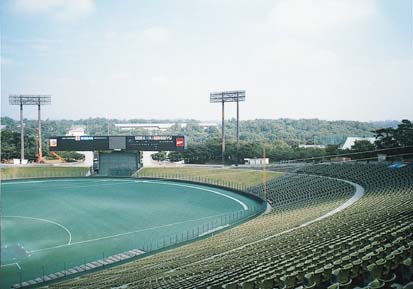
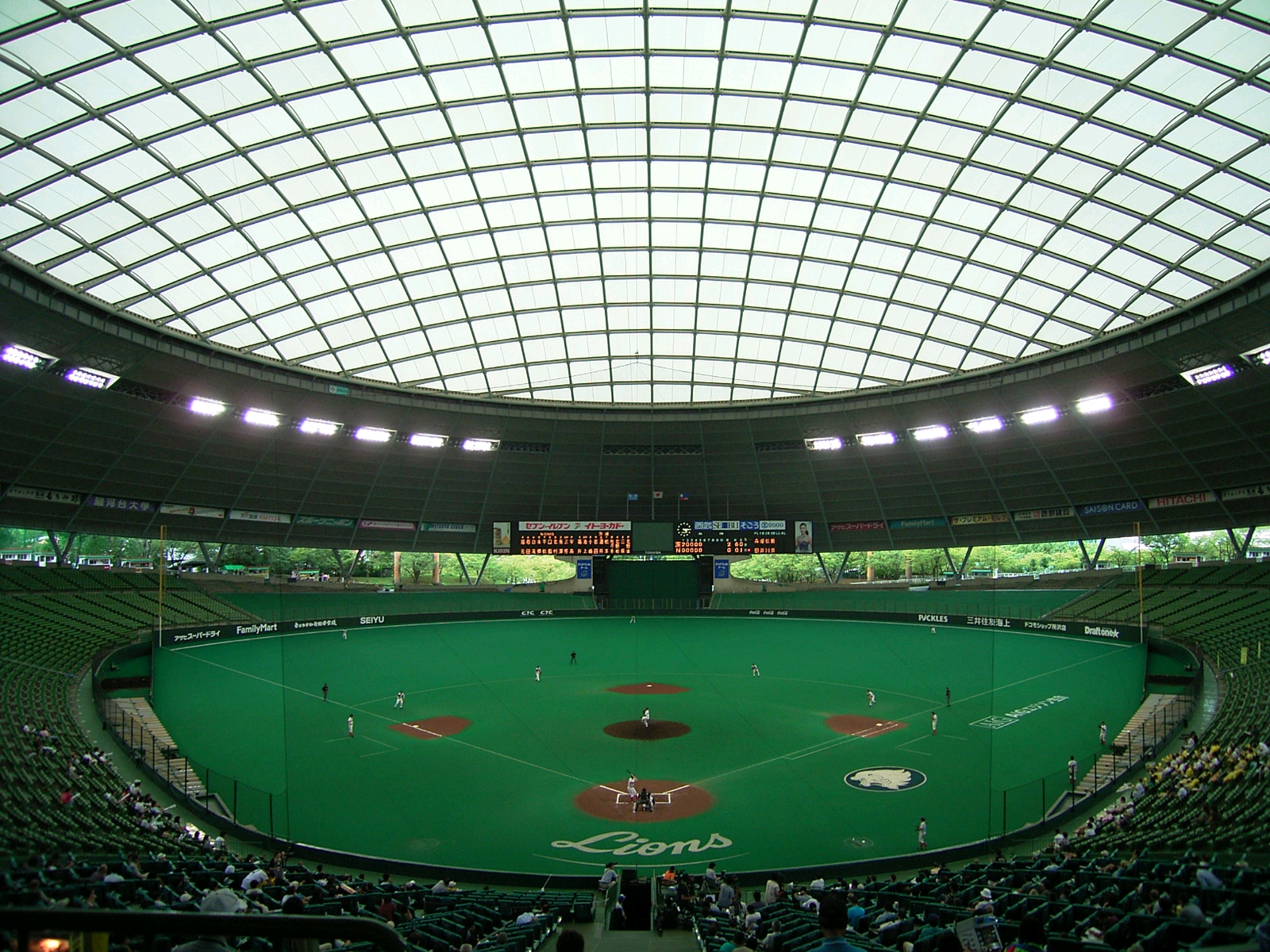
Seibu Dome was originally an outdoor stadium when the Lions moved there in 1979. It was then known as Seibu Stadium. While there is a roof, you can see that in the outfield and all around the building that it can be exposed to wind and hot temperatures with the open face.  The domed roof was added in 1998. Due to one player being sold, the place underwent renovations after 2007.


===

Mascots: Leo (right) and Lyna (left) 


Leo is based off the character Kimba the White Lion in the Japanese Anime known as "Jungle Emperor Leo." The Lions used to have this as their main logo and still use it for flags (such as what's in centerfield near the country's flag. That flag is also seen during the NPB Draft.

===

Uniforms: The Lions have switched to Majestic for 2016.


Note: The Lions used to wear a bright blue design with the Kimba logo since their move to Tokorozawa. However, a scandal in the 00s by then-owner Yoshiaki Tsutsumi made them want to move on from it and rebranded to a dark blue design beginning in 2009.

===

Cheer song:  Hoero Lions (吠えろライオンズ) "Roar Lions" 


===

Ōendan Songs: 2017 Player songs at 00:00, Special songs at 6:37,  Special Chance themes at 8:44, [ソリャセ] (Soryase, an equivalent of "Let's Go") at 9:55, Regular chance themes at 10:30, Songs no longer in use at 14:16


Notes: 

The regular chance songs have similar tunes to "Cotton Eye Joe", "Do you know the Muffin man?", but notice how Chance #4 near the end has women and men singing separate lines. You can hear a cleaner version here. (Scoring song featured too) 


The Lions are the only Oendan in Japan to wave flags as a group. They do this when scoring and well as during the [ソリャセ], which is almost like saying "We want more runs".  

The scoring song title translates into "I saw a Lion running on the Horizon".  An up close version of the song can be heard in the video below starting at 2:41.  Here is a link to a full version of the song as sung by a person. Lastly, here's an instrumental version from a commemorative 1986 Nippon Series Champions box.  


===

MLB Comparison: Oakland Athletics

The Lions have found ways to be competitive with a low payroll more times than not. Since their move to Tokorozawa in 1979, the Lions have finished in the Bottom 3 of the Pacific League only three times.

Even when the Lions had their share of dominance during a "Golden Era" from 1984-1992, it is sometimes an afterthought with them being a Pacific League team. They were rebels, a lot like the Charlie Finley era Oakland A's coming up with new trends and styles.

Only difference is, the Lions have won a crucial elimination game multiple times in the 21st Century, including a Game 7 of the Japan Series. They've been competitive and avoided the cellar for the most part, which is good for a team that hasn't been a high spender in recent years. Playing in what is viewed as the "ugliest" stadium in NPB also draws this comparison to the Oakland A's, who play in the Oakland Coliseum.


===

Notable former MiLB and MLB players to play for the Lions:

Ryan Spilborghs, Esmerling Vasquez, Matty Alou, Terry Whitfield, George Vukovich, Kazuhisa Ishii, Bert Campaneries (as a coach)


===

Notable players who played in MLB: 

Daisuke Matsuzaka, Kazuo Matsui

Note: The Lions used a portion of the $51.1 million they acquired for Matsuzaka on renovations to the Seibu Dome. You can see the original look of the Dome prior to renovations here. Matsuzaka paid for restroom upgrades, an HD scoreboard, renovated field turf as well as adding bullpen box seats on the side.  

===

Verdict

Why you root for them: 

Because you're used to being in a big market, but rooting for a team with less fans in numbers. The Lions are far from the city, which is a distant train ride away to get to the Seibu Dome. Yes, they're in greater Tokyo, but forgotten due to teams like the Yomiuri Giants controlling the market.

It could also be that you're an Oakland A's fan knowing what it's like to compete on a lower budget. The Lions have benefited from their ballpark and developed pitching over the years. Like the A's, they have a strong amount of success in their team's history with 13 Japan Series championships overall when combining their time in Fukuoka with the Seibu era.

The Lions had a "Golden Age" where they won 11 pennants from 1982-1994 and took eight Japan Series titles in that timeframe. This dynasty gets overlooked, similar to how the A's had a three-peat from 1972-1974, due to being in the Pacific League.

Here at Graveyard Baseball, we can provide exclusive coverage of the team and insight in English for anyone. At the time of this writing, we're the only blog to write about the Lions in the English language.


===

Why you don't root for them:

Like the A's, the Lions have had their share of disappointing postseason exits. They were a strong team in both 2012 and 2013, but lost in the opening round when they were favored. You also dislike ugly stadiums if not teams from a suburb away from the city.

Crowds are also half empty on week nights due to the proximity from the heart of Tokyo. The average person who works in the city would not be able to attend a game on a week night at first pitch as it takes 30+ minutes by train to arrive at the Seibu Dome. The problem is that the games start at 6:00 p.m. local time, so an average salary man wouldn't be able to see a game if he or she got off work after 7:00 p.m.


===

Other NPB Teams in the series: 

Yomiuri Giants (巨人)


===

Follow us on Twitter: @GraveyardBall 

Friday, January 29, 2016

Graveyard Baseball Podcast: Lions ŌenDEN Episode 5

This is the Fifth episode of our Seibu Lions Podcast.

In this episode, we talk about the Saitama Seibu Lions entering training camps in Miyazaki and Kochi. We also discuss a few position battles, the reduced role of Takeya "Okawari-kun" Nakamura, Kenta Maeda and a short preview on the Central League!

The sound in the background is a refrigerator and heater coming from Topeka, Kansas. Thanks again for listening.

Be sure to provide feedback with anything we talk about. Click here if the embedding isn't visible.


 ===

Follow us on Twitter @GraveyardBall